
At Sapphire Psychiatric Medical Group, we understand the challenges that ADHD in children can present for families and educators.
This condition affects millions of kids worldwide, impacting their daily lives, academic performance, and social interactions.
Our team is dedicated to providing comprehensive support and effective treatment options for children with ADHD.
In this post, we’ll explore the key aspects of childhood ADHD, from symptoms to strategies for success at home and school.
What Is Child ADHD?
Understanding the Basics
Attention-Deficit/Hyperactivity Disorder (ADHD) in children is a complex neurodevelopmental condition that affects millions of young minds worldwide. This disorder impacts children’s daily lives and academic performance in significant ways.
Common Signs of ADHD in Children
Children with ADHD often struggle with inattention, hyperactivity, and impulsivity. These symptoms can manifest as:
- Difficulty focusing on tasks
- Frequent fidgeting
- Interrupting others
- Appearing to be in constant motion
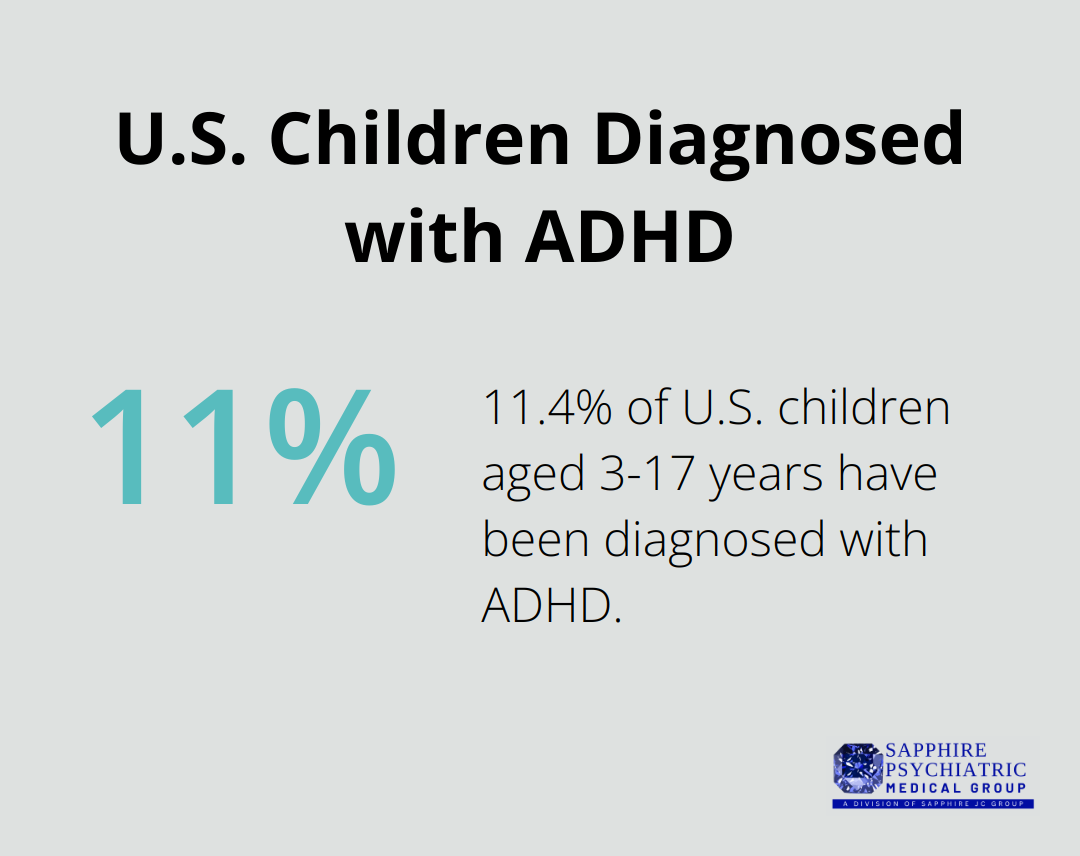
An estimated 7 million (11.4%) U.S. children aged 3–17 years have ever been diagnosed with ADHD, according to a national survey of parents using data from 2022.
ADHD in Children vs. Adults
While ADHD can persist into adulthood, its presentation often changes. Children typically display more overt hyperactivity, whereas adults may experience inner restlessness. The National Institute of Mental Health (NIMH) notes that the average age of ADHD diagnosis is around 7 years, with boys receiving diagnoses more frequently than girls (often at a ratio of 2:1 to 3:1).
Impact on Daily Life and School
ADHD can significantly affect a child’s academic performance and social interactions. Many children with ADHD face challenges with:
- Organization
- Time management
- Following instructions
These difficulties can result in lower grades and complications in peer relationships. A study published in the Journal of the American Academy of Child & Adolescent Psychiatry found that early treatment of ADHD can lead to better academic outcomes.
The Role of Professional Support
Mental health professionals work closely with families to develop tailored strategies for managing ADHD symptoms. Effective approaches often combine behavioral therapy, medication management when appropriate, and collaboration with schools to ensure comprehensive support for children with ADHD.
As we move forward, it’s important to explore the various treatment options available for children with ADHD. These interventions can make a substantial difference in a child’s ability to navigate daily challenges and thrive in academic and social settings.
Effective ADHD Treatments for Children
At Sapphire Psychiatric Medical Group, we champion a comprehensive approach to treating ADHD in children. Our methods combine evidence-based practices with personalized care to address each child’s unique needs.
Behavioral Therapy: A Foundation for Success
Experts recommend behavioral therapy over medication for children under the age of six because it is linked to fewer side effects and offers greater long-term benefits. This approach teaches children skills to manage their symptoms and improve their daily functioning. Parents play a vital role in this process, learning strategies to reinforce positive behaviors and create a supportive home environment.
The American Academy of Pediatrics reports that behavioral therapy can be as effective as medication for many children with ADHD. Our therapists collaborate closely with families to develop tailored strategies that address specific challenges (such as improving organization skills or managing impulsivity).
Medication Management: When and How
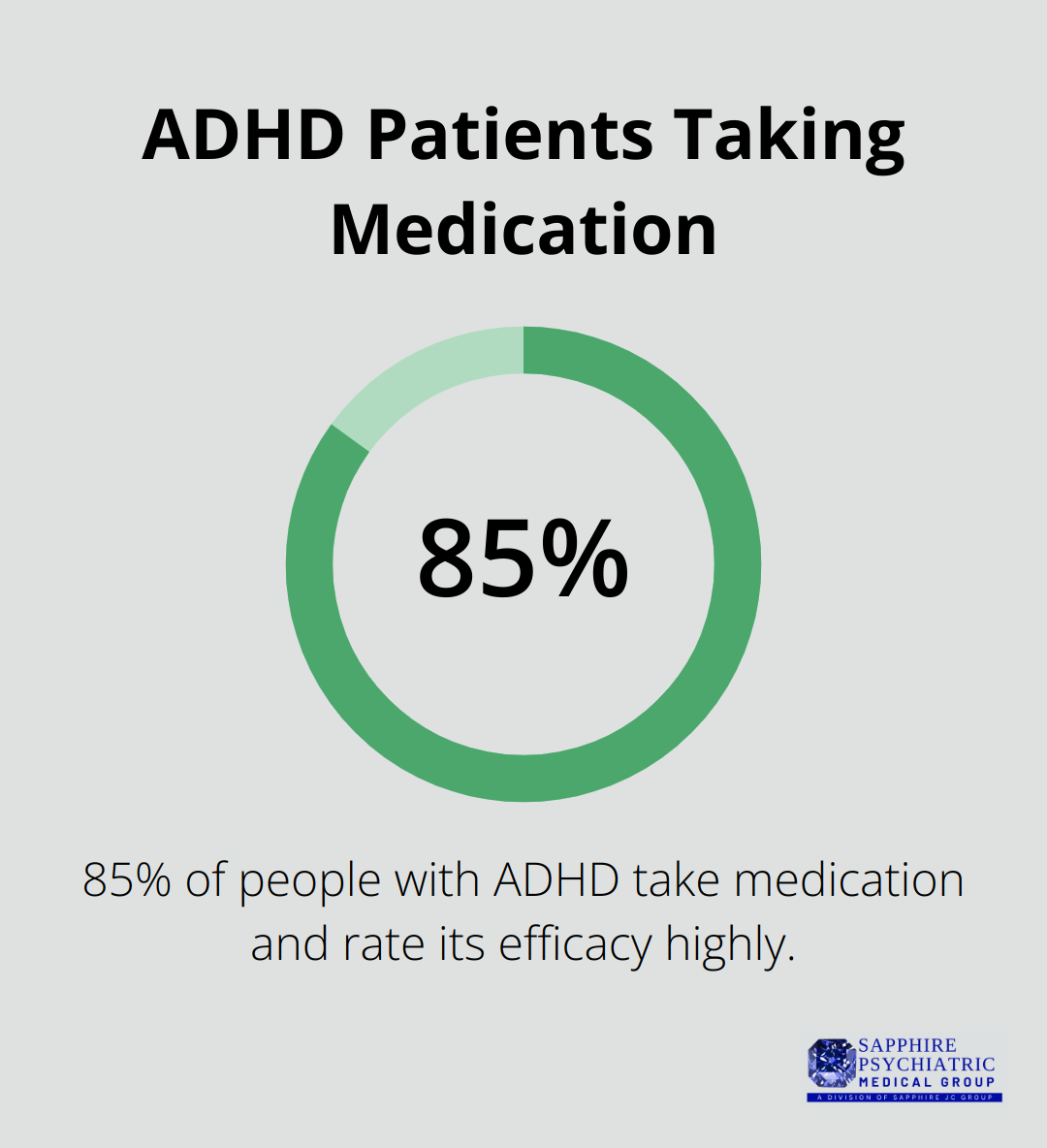
While behavioral therapy often suffices, some children benefit from medication in addition to other treatments. 85% of all people with ADHD end up taking medication and they rate its efficacy higher than any other treatment approach included in the survey.
Our psychiatrists carefully evaluate each child to determine if medication is appropriate. We consider factors such as age, severity of symptoms, and potential side effects. Regular follow-ups ensure that the medication works effectively and any necessary adjustments occur promptly.
Lifestyle Changes and Alternative Approaches
We encourage families to explore lifestyle changes that can support ADHD management. Regular physical activity demonstrates positive effects on attention and behavior in children with ADHD. We often recommend incorporating at least 60 minutes of exercise into a child’s daily routine.
Nutrition also plays a role in managing ADHD symptoms. While research continues, some studies suggest that certain dietary changes (such as reducing sugar intake and increasing omega-3 fatty acids) may help some children with ADHD.
Mindfulness practices, including meditation and yoga, can help children improve self-regulation and emotional control. These techniques benefit children in managing the anxiety and stress that often accompany ADHD.
Our goal is to help children with ADHD thrive at home, in school, and in their social lives. We create a support system that promotes long-term success and well-being through close collaboration with families and educators. The next chapter will explore how to create supportive environments for children with ADHD both at home and in school settings.
How Can We Support Children with ADHD?
At Sapphire Psychiatric Medical Group, we believe that supporting children with ADHD requires a multi-faceted approach that involves both home and school environments. Our experience shows that creating structured, consistent, and positive spaces significantly improves outcomes for children with ADHD.
Creating a Supportive Home Environment
Establishing a structured home environment is important for children with ADHD. We recommend the designation of specific areas for different activities. For example, create a quiet, clutter-free homework station away from distractions like TVs or high-traffic areas. This helps children focus on their tasks more effectively.
Time management tools can be game-changers. Visual schedules and timers help children understand and follow daily routines. For instance, use a large wall calendar to mark important dates and deadlines to help your child stay organized and reduce anxiety about upcoming events.
Implementing Effective School Strategies
Collaboration with teachers and school staff is essential. We encourage parents to schedule regular meetings with educators to discuss their child’s progress and challenges. During these meetings, share strategies that work at home and ask about classroom accommodations.
One effective strategy is the use of fidget tools or movement breaks. Many patients report improved focus when allowed to use stress balls or take short walks during class time. These simple interventions can significantly reduce restlessness and improve attention span.
Positive Reinforcement Techniques
Positive reinforcement is a powerful tool for managing ADHD symptoms. Studies show that under continuous positive reinforcement, children with and without ADHD learn tasks more quickly than they do with less frequent reinforcement. We recommend the implementation of a reward system that acknowledges both effort and achievement. For example, you might use a point system where children earn points for completing tasks or demonstrating good behavior. These points can then be exchanged for privileges or small rewards.

It’s important to provide immediate feedback. Children with ADHD often struggle with delayed gratification, so prompt recognition of positive behaviors reinforces good habits more effectively.
Leveraging Technology for ADHD Management
Technology can be a valuable ally in managing ADHD symptoms. There are numerous apps designed specifically for children with ADHD that can help with organization, time management, and focus. For instance, some apps use gamification to make task completion more engaging, while others provide reminders and break complex tasks into manageable steps.
However, it’s important to monitor screen time. The American Academy of Pediatrics recommends no more than one to two hours of screen time per day for children. Excessive screen time can exacerbate attention issues and disrupt sleep patterns.
Promoting Healthy Lifestyle Habits
Diet and exercise play significant roles in managing ADHD symptoms. We often recommend the incorporation of omega-3 fatty acids into a child’s diet, as some studies suggest they may help improve focus and reduce hyperactivity. Regular physical activity is equally important. Try to include at least 60 minutes of moderate to vigorous exercise daily (this can include structured sports, playground time, or even active video games that require physical movement).
Adequate sleep is important for children with ADHD. Establish a consistent bedtime routine and try to ensure 9-11 hours of sleep per night for school-age children. This helps regulate mood and improves focus during the day.
Final Thoughts
ADHD in children requires early intervention and comprehensive care. Research shows that children who receive appropriate treatment early develop effective coping strategies and experience better academic and social success. Many children with ADHD lead fulfilling lives, excel in their chosen fields, and maintain healthy relationships.
Numerous organizations provide valuable information and support for parents and caregivers seeking resources. The National Resource Center on ADHD offers comprehensive guides and educational materials (both online and in-person). Support groups can provide a sense of community and shared experiences for families navigating ADHD challenges.
At Sapphire Psychiatric Medical Group, we support families throughout their ADHD journey. Our team of licensed psychiatric professionals offers personalized care through various service models. We invite you to reach out to our team for expert ADHD management to help your child reach their full potential.


