
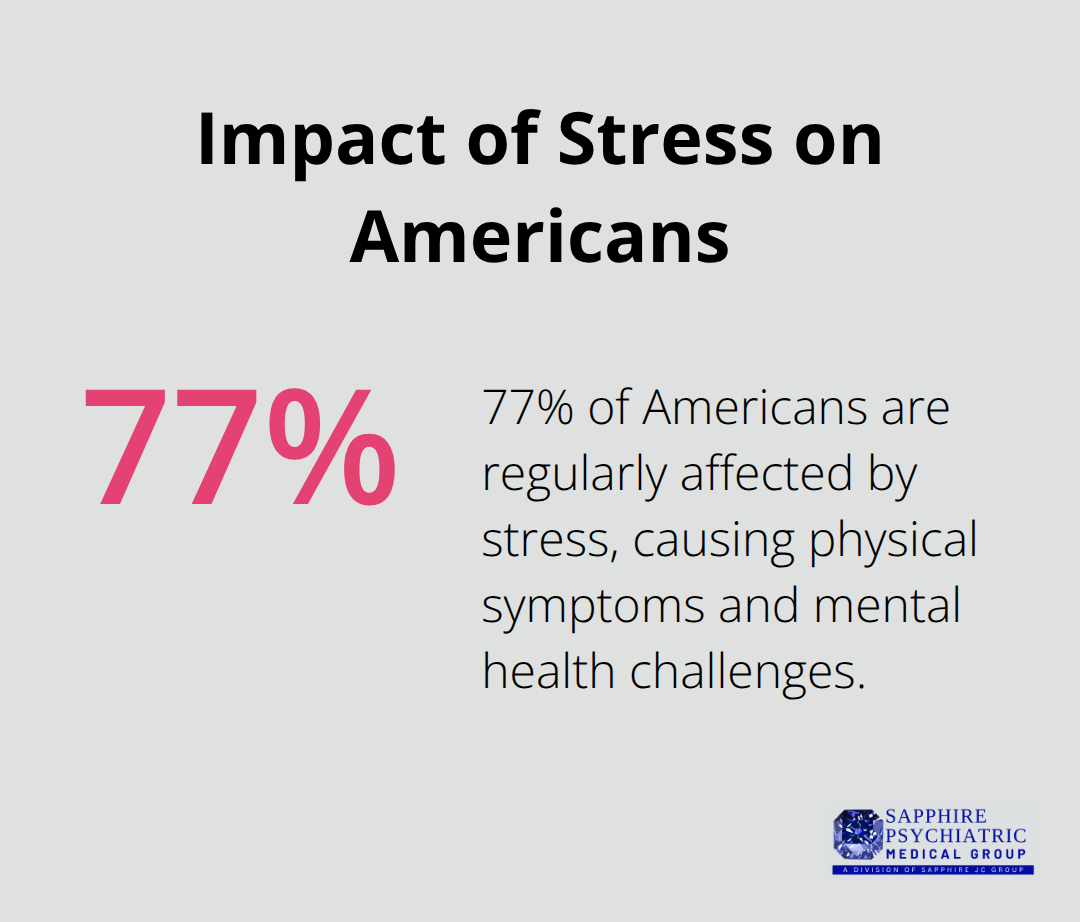
Stress affects 77% of Americans regularly, causing both physical symptoms and mental health challenges. The American Psychological Association reports that chronic stress contributes to anxiety, depression, and cognitive impairment.
We at Sapphire Psychiatric Medical Group see patients daily who struggle with overwhelming stress levels. Effective management requires combining evidence-based techniques with professional support when needed.
How Stress Actually Damages Your Body and Mind
Chronic stress triggers a cascade of physical symptoms that many people dismiss as normal aging or lifestyle issues. The American Heart Association found that prolonged stress increases cortisol levels by up to 50%, which leads to headaches, muscle tension, digestive problems, and elevated blood pressure. Sleep disruption affects 68% of chronically stressed individuals (according to the Sleep Foundation), and this creates a vicious cycle where poor rest amplifies stress responses. Your immune system weakens under constant pressure, which makes you 40% more susceptible to infections and illnesses.
Stress Rewires Your Brain Against You
Chronic stress physically shrinks the prefrontal cortex while it enlarges the amygdala, according to Harvard Medical School research. This means your decision-making abilities decline while your fear responses become hyperactive. Working memory drops by 25% during high-stress periods, which explains why you forget important details or make poor choices when overwhelmed. The hippocampus, responsible for learning and memory, actually loses neurons under prolonged stress exposure. Stanford University studies show that stressed individuals take 30% longer to solve complex problems and make 60% more errors in judgment.
The Direct Path from Stress to Mental Illness
Stress acts as a primary catalyst for anxiety disorders, with 85% of generalized anxiety cases linked to chronic stress exposure according to the National Institute of Mental Health. Depression rates double in individuals who experience prolonged stress, as chronic stress contributes considerably to the development of cognitive impairments in psychiatric disorders. The World Health Organization reports that stress-related mental health conditions cost the global economy $1 trillion annually (a staggering figure that continues to rise). Post-traumatic stress disorder develops in 20% of people exposed to severe chronic stress, even without a single traumatic event.
These biological changes don’t happen overnight, but they compound quickly when stress becomes chronic. The next step involves understanding which evidence-based techniques can reverse these harmful effects and restore your mental clarity.
Which Techniques Actually Work to Reduce Stress
Mindfulness meditation can physically change the brain within eight weeks according to Harvard University research. Start with just two minutes daily with apps like Headspace or Insight Timer, and focus on breath awareness rather than empty your mind completely. The Mayo Clinic found that consistent five-minute sessions produce measurable stress reduction, while 20-minute practices show maximum benefits. Deep breath exercises activate your parasympathetic nervous system immediately – try the 4-7-8 technique where you inhale for 4 counts, hold for 7, and exhale for 8. This physiological response reduces heart rate within 60 seconds and works even during acute stress episodes.
Cognitive Behavioral Techniques Stop Stress Spirals
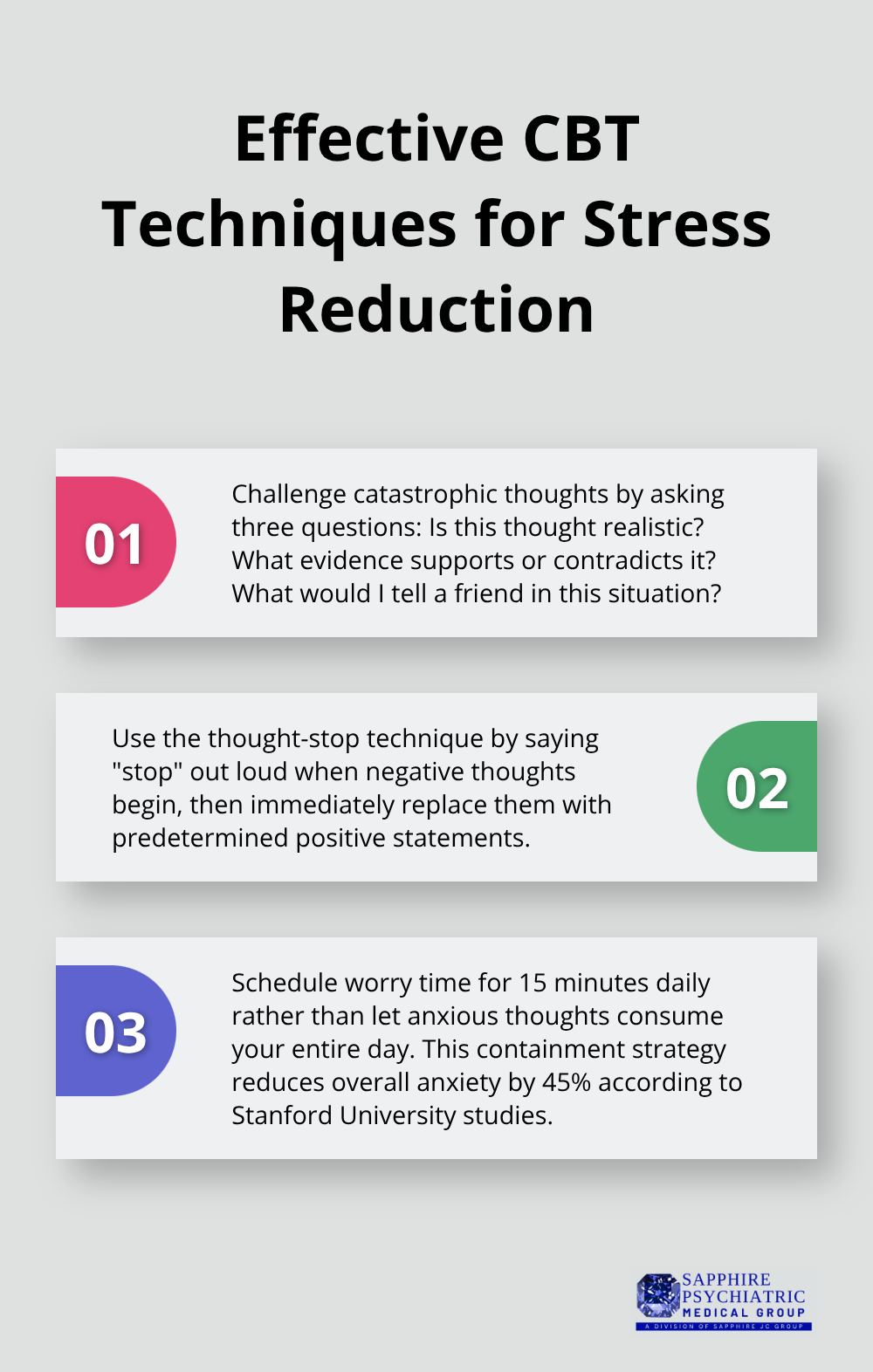
CBT techniques help 73% of patients reduce stress-related symptoms within 12 weeks (according to the National Institute of Mental Health). Challenge catastrophic thoughts by asking three questions: Is this thought realistic? What evidence supports or contradicts it? What would I tell a friend in this situation? Write down your stress triggers and rate them from 1-10, then develop specific responses for each level. The thought-stop technique involves saying “stop” out loud when negative thoughts begin, then immediately replace them with predetermined positive statements. Schedule worry time for 15 minutes daily rather than let anxious thoughts consume your entire day. This containment strategy reduces overall anxiety by 45% according to Stanford University studies.
Exercise Beats Stress Better Than Medication
Physical activity reduces stress hormones while boosting endorphins that improve mood naturally. Aerobic exercise for just 20 minutes releases brain-derived neurotrophic factor, which repairs stress damage to your hippocampus. High-intensity interval training produces the fastest results – alternate 30 seconds of intense activity with 90 seconds of recovery for 15 minutes total. Yoga combines movement with mindfulness and lowers cortisol by 35% after just one session based on research from Johns Hopkins. Walking outdoors for 10 minutes reduces perceived stress more effectively than indoor exercise, while strength training builds resilience against future stressors.
These evidence-based techniques provide immediate relief, but chronic stress often requires professional intervention to address underlying patterns and develop comprehensive treatment plans.
When Should You Seek Professional Help
Most people wait too long before they seek professional mental health support. The National Alliance on Mental Illness reports that individuals with stress-related conditions wait an average of 11 years before they get treatment, which allows symptoms to worsen significantly. You need professional help when stress interferes with work performance for more than two weeks, when you rely on alcohol or substances to cope, or when physical symptoms like chronic headaches or digestive issues persist despite medical treatment. Sleep disruption that lasts longer than one month signals that stress has moved beyond normal levels. The American Psychiatric Association states that 40% of adults experience anxiety severe enough to impair daily function, yet only 23% receive appropriate treatment.
Medication Provides Fast Relief for Severe Stress Symptoms
Selective serotonin reuptake inhibitors like sertraline and escitalopram help reduce stress-related anxiety, with fluoxetine having the longest half-life while fluvoxamine has a short half-life. Benzodiazepines provide immediate relief during acute stress episodes but should only be used short-term due to dependency risks. Beta-blockers effectively control physical stress symptoms like rapid heartbeat and tremors, which makes them ideal for performance anxiety. The FDA approved prazosin specifically for stress-related nightmares and sleep disturbances in 2019. Buspirone offers anxiety relief without sedation or addiction potential, though it takes four to six weeks to reach full effectiveness.
CBT and EMDR Target Stress at Its Source
Cognitive Behavioral Therapy produces results that last in 75% of stress cases within 16 sessions, according to the American Psychological Association. CBT teaches specific skills to identify stress triggers, challenge distorted thoughts, and develop healthy coping mechanisms that work long-term. Eye Movement Desensitization and Reprocessing processes traumatic memories that fuel chronic stress, with 84% of patients who show significant improvement after eight sessions based on research from the International Society for Traumatic Stress Studies. EMDR works particularly well for stress that stems from past trauma or adverse childhood experiences.

Dialectical Behavior Therapy Builds Emotional Resilience
Dialectical Behavior Therapy combines mindfulness with distress tolerance skills and reduces stress-related emotional reactivity by 60% within six months. This approach teaches four core modules: mindfulness, distress tolerance, emotion regulation, and interpersonal effectiveness. Patients learn to observe their emotions without immediate reaction, which breaks the cycle of stress escalation. The skills transfer to real-world situations and create sustainable stress reduction that lasts years beyond treatment completion. These therapeutic approaches address root causes rather than just manage symptoms.
Final Thoughts
An effective stress management plan combines multiple techniques that work specifically for your lifestyle and stress triggers. Start with one evidence-based method like five-minute daily meditation or 20-minute walks, then gradually add cognitive behavioral strategies and breath exercises. The key lies in consistent daily practice rather than perfect execution.
Professional support accelerates your progress significantly. We at Sapphire Psychiatric Medical Group provide comprehensive mental health services that include medication management, psychotherapy, and specialized treatments for stress-related conditions. Our licensed psychiatric professionals offer flexible care through telehealth, in-home visits, and traditional outpatient services to meet you where you feel most comfortable.
Take the first step and acknowledge that stress management is a skill that improves with practice and professional guidance (whether you start with self-help techniques or seek immediate professional support). The important decision is to begin today. Your mental health deserves the same attention you give to physical health, and effective stress reduction creates improvements in both areas.


